Central Florida Hurricane Protection
Storm Panels: Removable Hurricane Protection
Storm panels cover your openings when protection is needed and are removed for storage afterward. We help you compare the available options and understand the preparation, handling, and storage involved.
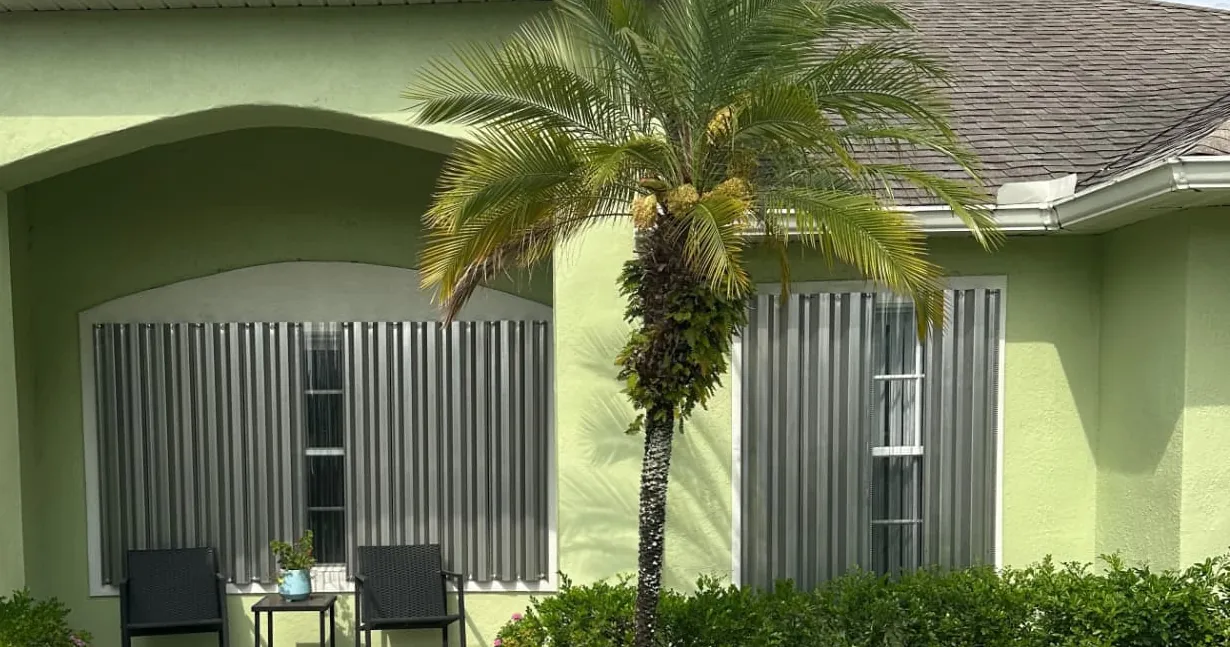
Storm panels installed over front windows.
Your Main Questions, Answered
Straight answers first. Some details genuinely depend on your openings, and those are marked so you know what still has to be checked at your home.
Will I need to lift and install these before each storm?
Yes. Panels are stored away from the openings and have to be carried out and fitted to each opening before a storm, then taken down and put back into storage afterwards. That is the trade you make for the lower cost of a removable system.
Confirmed at your property assessment: We go opening by opening with you and estimate how many panels each one takes, so you know what putting the whole home up actually involves before you decide.
Can I safely handle them myself, or will I need help?
That depends on the material and the size of the panel, on how many openings you have, and on your own strength, balance and reach. Aluminum and galvanized steel panels are heavier than clear polycarbonate panels of the same size, and a tall opening needs a longer, more awkward panel. We will not tell you this is easy for everyone, and we do not suggest working from a ladder.
Confirmed at your property assessment: We let you handle a panel of the size your openings need before you commit, and we tell you plainly where we think you would need help.
Where will I store them?
Panels need a dry, flat, out-of-the-way place — a garage wall, a shed or under a workbench — where they can stay stacked in order and where the hardware stays with them. Storage space is one of the first things to settle, because a full home's worth of panels takes up real room.
Confirmed at your property assessment: We work out the stack size for your openings during the assessment so you can look at your own space and judge whether it fits.
What do the openings look like after removal?
The panels themselves come off, so the glass is clear again. What stays on the home is the permanently installed mounting hardware the approved system requires around each opening — the tracks, headers or anchors it is fastened to. How visible that is depends on the system and the opening.
Confirmed at your property assessment: We show you the mounting components for the exact system quoted, on your own openings, before anything is ordered.
Can clear panels let daylight through?
Clear polycarbonate panels are translucent, so rooms behind them are not left completely dark in the way an opaque metal panel leaves them. How much light reaches a room depends on the panel, the opening and the weather outside, and we do not quote a light-transmission figure for a system until it is verified.
What affects the installed price?
The number and size of your openings, the material chosen, how many panels each opening takes, the mounting hardware the approved system requires, the wall or frame it is fastened to, access and height, and whether permitting is included. You receive a written estimate for your actual openings rather than a price per foot over the phone.
What maintenance is needed?
Mainly organization and inspection: keeping panels labeled by opening, keeping the correct hardware with them, checking for missing, bent, cracked or corroded parts, and looking over the mounting components on the home. See the care and storage section below.
Where Storm Panels Fit Best
Removable panels are usually the most economical way to protect a home, and they can suit a homeowner who has somewhere to store them and a practical plan for getting them up and down safely. They are the option that asks the most of you when a storm is forecast.
Situations they suit
- Homeowners who want opening protection at the lowest installed cost.
- Homes with dry, accessible storage space for a full set of panels and their hardware.
- Households with a written preparation plan — who puts the panels up, in what order, and how long before a storm.
- Homeowners who have family, neighbors or a hired helper they can arrange in advance.
- Openings that can be reached and worked on safely from the ground.
Practical tradeoffs
- Panels must be carried out, fitted and taken down again for every storm, well ahead of the weather.
- Weight and handling depend on the material and the panel size; larger openings mean longer, more awkward panels.
- Storage takes real space, and panels only stay usable if they are kept in order with their hardware.
- The mounting components the approved system requires stay permanently on the openings.
- We cannot promise last-minute help. When a storm is threatening, crews and helpers are already committed, so your plan has to work without us.
Another product is sometimes the better fit. We compare them with you for your actual openings rather than naming a single best product.
- Accordion shutters: Stay attached to the opening all year and fold to the sides, so there is nothing to carry out or store before a storm. Read about accordion shutters
- Roll-down shutters: Also permanently installed, retracting into a housing above the opening. Often chosen for large openings and for homeowners who do not want to handle panels at all. Read about roll-down shutters
- UltraShield hurricane screens: A retractable option for suitable outdoor openings such as a lanai or patio, where a screen closure is preferred to carrying and fitting panels. Read about ultrashield hurricane screens
- Bahama and Colonial shutters: Chosen where the appearance of the home from the street matters as much as the protection. Read about bahama and colonial shutters
Real Installation Examples
Photographs of completed storm-panel work are grouped by material when the material is identified. We keep aluminum, clear polycarbonate and galvanized steel panels separate.
Additional Storm Panels Photos
These photos are assigned to this product page but not yet confirmed to a separate material or style group.
Galvanized Steel Storm Panels
Galvanized steel panel photographs are grouped here separately from aluminum and clear polycarbonate panels.
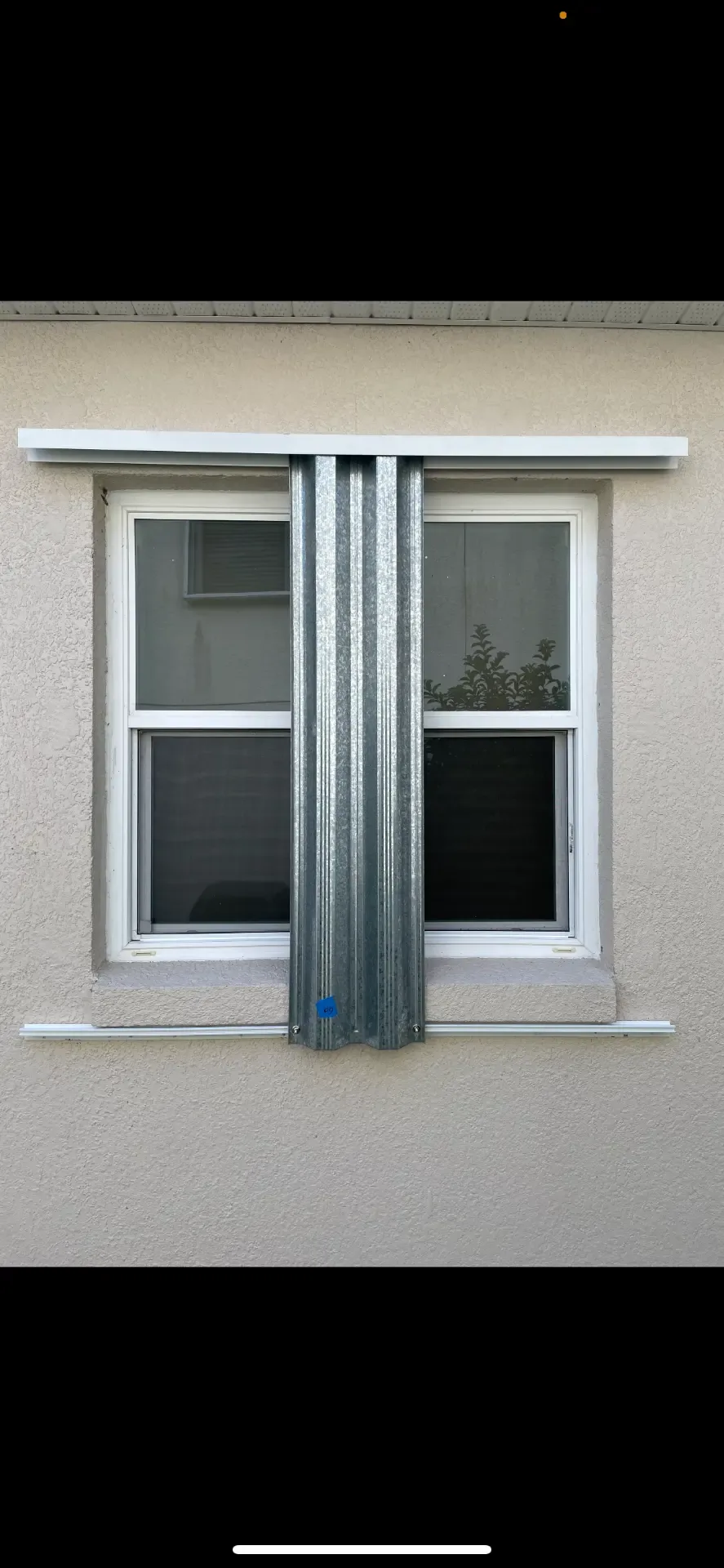
Photo 1 of 8
Clear/Polycarbonate Storm Panels
Clear panel photographs are grouped here separately from metal panel photographs.
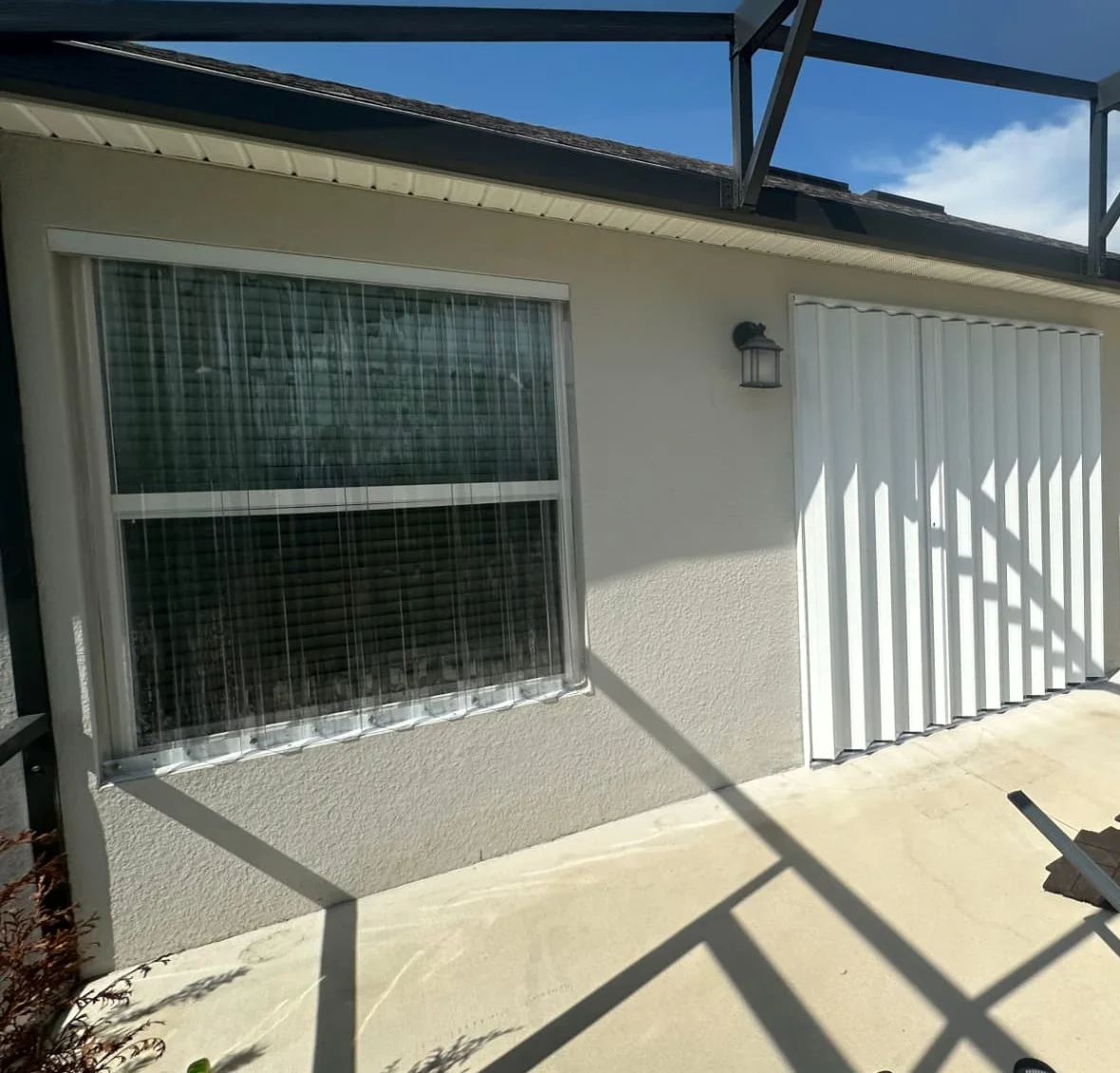
Photo 1 of 5
Product Approvals & Drawings
Choose a Panel Material
Select a material below to see its product details and approval documents. You can open more than one option to compare.
Installation & Service
Product brand: Bertha
Manufacturer: Eastern Metal Supply
Aluminum Storm Panels
Manufacturer: Eastern Metal Supply
Florida's official product-approval record lists Eastern Metal Supply's 2-inch by 0.050-inch aluminum storm panels as approved under FL39178-R1, product number FL39178.1, for the Florida Building Code, Eighth Edition (2023). The engineering drawings, product evaluation report and the engineer's Certificate of Independence are published here exactly as issued. An approval shows the system was tested and approved — it does not make every opening suitable. That depends on the opening, the structural host, the mounting conditions and the installation requirements in the drawings.
Verified benefits
- Opaque metal removable protection with a verified Florida approval record for the FL39178.1 system.
- The official record lists impact resistance and use inside and outside the HVHZ, subject to the approved drawings.
Suitable uses
- Openings where a removable opaque panel is practical to handle, label, install and store.
- Projects where the opening, host structure, anchorage and spans can follow the FL39178.1 approved schedules.
FL39178-R1 is the Florida approval record. FL39178.1 is the product number listed on that record and printed in the documents.
- Manufacturer
- Eastern Metal Supply
- System
- 2" x 0.050" Aluminum Storm Panels
- Florida approval
- FL39178-R1
- Revision
- R1 (application type: Revision)
- Code edition
- Florida Building Code, Eighth Edition (2023)
- Application status
- Approved
- Date approved
- December 13, 2023
- Official record revised
- August 14, 2026
- Document
- Engineering drawings FL39178_R1_II__DWG
- Document date
- October 6, 2023
- Document signed
- October 9, 2023
- Product number on the record
- FL39178.1
- Category
- Shutters — Storm Panels
- Impact resistant
- Yes. Approved for use inside and outside the HVHZ
- Design pressure on the record
- +130 / -130. Design pressures and allowable spans follow the span schedules in the drawings.
- Impact classification stated in drawings
- Large Missile Impact Resistant — Missile Level D
- Evaluation
- Method 1 Option D evaluation report by Richard Neet, P.E. (PE-86488), Engineering Express project EX #23-65188; ASCE 7-22 (ASD)
What the document itself says about limits
- Design pressures and allowable spans follow the span schedules in the drawings; a single figure must not be applied to every opening.
- The evaluation is Florida-only and non-site-specific. Each opening, structural host, mounting condition and installation must meet the drawings and any required site-specific professional review.
- Panel spans, anchors and fastening conditions vary within the drawings and must not be treated as universal values.
Dated October 6, 2023; signed October 9, 2023
October 6, 2023
October 6, 2023 — the evaluating engineer's statement that he is independent of the manufacturer
Documents are displayed unaltered. The viewer provides no download or print button, but browser saving, screenshots or printing cannot be completely prevented.
Official Florida Approval Record (opens another website)Installation & Service
Product brand: Bertha
Manufacturer: Eastern Metal Supply
Bertha 2-inch Clear Storm Panels
Manufacturer: Eastern Metal Supply
Florida's official product-approval record lists Eastern Metal Supply's 2-inch Clear Bertha Storm Panel as approved under FL28390-R2, product number FL28390.1, for the Florida Building Code, Eighth Edition (2023). The engineering drawings, evaluation report and the engineer's Certificate of Independence are published here exactly as issued. An approval shows the system was tested and approved — it does not make every opening suitable. That depends on the opening, the supporting structure, the anchorage, the installation details and the approved schedules in the drawings.
Verified benefits
- Clear polycarbonate panels allow daylight through while the opening is covered.
- The official record lists large-missile impact resistance and use inside and outside the HVHZ, subject to the approved drawings.
Suitable uses
- Openings where a removable clear panel is preferred over an opaque metal panel.
- Projects where the opening, supporting structure, anchorage and schedules match the FL28390.1 approved drawings.
FL28390-R2 is the Florida approval record (application type: Revision). FL28390.1 is the product number for the clear panel published here. The Certificate of Independence also names FL28390.2, a separate Simplified Edition listing under the same record; the drawings and evaluation report shown here are FL28390.1, Engineering Express project 23-65158.
- Manufacturer
- Eastern Metal Supply
- System
- 2" Clear Bertha Storm Panel
- Florida approval
- FL28390-R2
- Revision
- R2 (application type: Revision)
- Code edition
- Florida Building Code, Eighth Edition (2023)
- Application status
- Approved
- Date approved
- December 13, 2023
- Official record revised
- August 18, 2026
- Document
- Engineering drawings FL28390_R2_II__DWG1
- Document date
- October 6, 2023
- Document signed
- October 12, 2023
- Product number on the record
- FL28390.1
- Category
- Shutters — Storm Panels
- Material
- Clear polycarbonate, 0.100 inch thick
- Impact resistant
- Yes. Large Missile Impact Resistant — Missile Level D. Approved for use inside and outside the HVHZ, subject to the limitations in the drawings.
- Design pressure on the record
- +60 / -60. Allowable spans and anchor spacing follow the schedules in the drawings.
- Evaluation
- Method 1 Option D evaluation report by Frank Bennardo, P.E. (PE0046549), Engineering Express project 23-65158; ASCE 7-22 (ASD)
What the document itself says about limits
- Allowable spans, anchor spacing and required separation from glazing follow the schedules in the drawings; a single figure must not be applied to every opening.
- The evaluation is non-site-specific and Florida-only. Each opening, structural host, anchorage and installation must meet the drawings, and conditions outside them need separate site-specific sealed engineering.
- Approval for use inside and outside the HVHZ applies only subject to the limitations stated in the drawings, including the separate HVHZ and non-HVHZ anchor schedules.
- The structural adequacy of the existing structure to carry the loads from this system must be verified by others.
The sealed drawings showing approved panel spans, connections and anchor schedules. Cover dated October 6, 2023; digitally signed October 12, 2023.
The engineer's report setting out the testing and calculations the approval rests on. Dated October 4, 2023; digitally signed October 12, 2023.
The evaluating engineer's statement that he has no financial interest in the manufacturer. Dated October 4, 2023.
Documents are displayed unaltered. The viewer provides no download or print button, but browser saving, screenshots or printing cannot be completely prevented.
Official Florida Approval Record (opens another website)Installation & Service
Product brand: Bertha
Manufacturer: Eastern Metal Supply
Bertha 28-Gauge Galvanized Steel Storm Panels
Manufacturer: Eastern Metal Supply
This Bertha system uses 28-gauge galvanized steel storm panels. View its engineering drawings and supporting documents below. The correct panel size, fastening, and installation depend on your home’s openings and supporting structure.
Verified benefits
- Opaque removable galvanized steel panels with a verified Florida approval record for the FL22270.1 HVHZ/Impact system.
- The official record lists impact resistance and use inside and outside the HVHZ, subject to the approved drawings and installation requirements.
Suitable uses
- Openings where a removable opaque steel panel is practical to handle, label, install and store.
- Projects where the opening, supporting structure, anchorage and schedules match the FL22270.1 approved drawings.
FL22270-R3 is the Florida approval record (application type: Revision). FL22270.1 is the HVHZ/Impact product listing published here. The same official record also lists FL22270.2, a separate WZ3/Impact variant with different drawings and evaluation report; those documents are not used for this entry.
- Manufacturer
- Eastern Metal Supply
- System
- 28 Gauge Storm Panel (HVHZ)(Impact)
- Florida approval
- FL22270-R3
- Revision
- R3 (application type: Revision)
- Code edition
- Florida Building Code, Eighth Edition (2023)
- Application status
- Approved
- Date approved
- December 13, 2023
- Document
- Engineering drawings FL22270_R3_II_EMS004
- Document date
- Original title-block date October 3, 2017; 2023 FBC update September 18, 2023
- Document signed
- October 19, 2023
- Product number on the record
- FL22270.1
- Category
- Shutters — Storm Panels
- Material
- Galvanized steel, 28 gauge
- Installation drawing
- EMS004
- Evaluation report
- 8826
- Approved use
- Impact resistant: Yes. Approved for use in the High-Velocity Hurricane Zone (HVHZ) and outside that zone, when installed in compliance with EMS004 and the approval requirements.
- Evaluation
- Method 1 Option D evaluation report by Hermes F. Norero, P.E. (PE-73778), Building Drops, Inc.; TAS 201-94, TAS 202-94 and TAS 203-94 referenced.
What the document itself says about limits
- The official record says to see the installation instructions and evaluation report for allowable design pressures, sizes, installation requirements and limits of use.
- The drawings are generic and may not reflect the conditions at a specific site; site conditions that deviate from EMS004 require site-specific documents by a licensed engineer or registered architect.
- Anchor type, spacing, embedment, edge distance, allowable span and required separation from glass depend on the approved schedules and installation conditions in EMS004.
- The permit holder must verify the existing structure can sustain the added loads and verify all job-site dimensions before work begins.
Installation details, permitted configurations, and limitations.
Drawing EMS004: original title-block date October 3, 2017; 2023 FBC update September 18, 2023; digitally signed October 19, 2023.
Technical evaluation and conditions of use.
Evaluation report 8826: dated September 18, 2023; digitally signed October 19, 2023.
Engineer’s statement of financial independence.
Certificate of Independence: dated October 13, 2023; digitally signed October 19, 2023.
Documents are displayed unaltered. The viewer provides no download or print button, but browser saving, screenshots or printing cannot be completely prevented.
Official Florida Approval Record (opens another website)My Safe Florida Home
My Safe Florida Home is a State of Florida program run by the Florida Department of Financial Services. It offers free wind-mitigation inspections and, for homeowners who qualify, grant assistance toward approved improvements. It is not our program, and we are not part of it.
- This product. Opening protection such as removable storm panels is one of the improvement types the program considers. That does not mean your home, this material, or this installation qualifies — your wind-mitigation inspection recommendations, the scope of your project and the program's own decision determine eligibility.
- Funding is never guaranteed. Your inspection report and the program decide what, if anything, is funded, and availability changes.
- Do not start work early. If you intend to use grant assistance, construction must not begin before the program has approved your grant. Starting early can disqualify the work.
How it works. You create an account with the program, answer its questionnaire, and are placed in a group. A free wind-mitigation inspection is scheduled, and the inspection report lists the improvements recommended for your home. A grant application follows if you qualify.
What decides eligibility. The program sets the rules — including home type, homestead status, income and age priority groups — and the inspection recommendations and program approval determine what, if anything, is funded.
Our part in it. We are a licensed Florida contractor (Florida Certified Building Contractor CBC1270515). We do not describe ourselves as a program-approved or authorised contractor, and we make no claim of government endorsement. Check the program’s own requirements for the contractor you choose before signing anything.
This link opens the official My Safe Florida Home website (mysafeflhome.com) in a new tab and leaves our website.
Payment Options
Grant assistance and financing are two separate things. Grant assistance comes from the state program described above. Financing is an arrangement between you and a lender.
If paying over time would help, you can look at financing through Enhancify, an outside financing provider. Any amount, term or approval is decided by Enhancify, not by us, so we do not quote rates or monthly payments here.
Explore Financing OptionsThis opens Enhancify’s website in a new tab. You will be leaving our website.
Prefer to talk it through first? Call us at 407-883-1873.
Care and Maintenance
A few simple habits help keep the system ready to operate.
Label every panel by opening
Panels are cut for particular openings and are not interchangeable. Mark each one clearly for the opening it belongs to and store them in that order, so nobody is sorting panels in the yard the day before a storm.
Keep the hardware with the panels
Wing nuts, bolts and any clips belong in labeled, closed containers stored with the panels. Missing hardware is the most common reason a panel cannot go up on time.
Check for missing or damaged components
Well before hurricane season, count the panels against your openings and look over each one for bends, cracks, corrosion, damaged edges or worn holes. Check the mounting components on the home too. Call 407-883-1873 about anything missing or damaged rather than improvising a substitute.
Follow the instructions for your exact system
Fastening, hardware and panel placement come from the manufacturer's documentation and the engineering drawings for the system installed on your home. We do not publish generic spacing or substitute-hardware instructions here, because doing so could conflict with the drawings your permit was issued against.
Store panels dry, flat and clear of traffic
Keep panels off damp ground, stacked flat or on edge in a rack, away from where they can be knocked over. Separate clear panels so their surfaces are not ground against each other or against grit.
Plan emergency exit access for your own home
How exit doors and bedroom escape windows are handled when panels are up is specific to your property and to the system installed. It is reviewed during the assessment and in the permit and inspection process, and it is written into your plan for which openings are covered and when.
Do a dry run before the season
Put up one or two panels on a calm day with whoever will actually be doing it. A dry run shows up missing hardware, a stiff fastening or a panel that is too heavy for one person, while there is still time to fix it.
Questions People Ask Us
How far ahead of a storm should panels go up?
Well before the weather arrives — while conditions are calm, dry and light, and while help is still available. Putting panels up is not a last-minute job, and we cannot promise assistance once a storm is threatening, because our crews are committed in advance.
Do storm panels leave anything permanently on my home?
Yes. The mounting components the approved system requires stay on the openings all year so the panels have something to fasten to. Only the panels themselves come off and go into storage.
Confirmed at your property assessment: We show you exactly which components remain on each opening, and how they look, before you decide.
Are aluminum, steel and polycarbonate panels interchangeable?
No. Each material has its own approval, approved sizes and fastening requirements. Panels for one opening or one material cannot be assumed to suit another.
Can I mix panels with other protection on the same home?
Many homes do. Panels on some openings and a permanently installed shutter on the openings that are hard to reach or awkward to handle is a common and practical combination.
Do I need a permit?
Hurricane protection is permitted work in Central Florida jurisdictions. We handle the permit application and the inspection process as part of the project. No one can promise how long a building department will take.
More questions, if you want the detail
Open any question below. You can leave several open at once.
Call 407-883-1873 with the opening it belongs to. A replacement has to match the approved system, so it is ordered rather than substituted with whatever fits. Do not fasten a panel with hardware it was not approved for.
Gently, with plain water and a soft cloth. Abrasive pads, scouring powders and strong solvents haze the surface permanently. Follow the manufacturer's cleaning guidance for the panels installed on your home.
It depends on the number and size of openings, the material, how many people are working and how organized the storage is. We can estimate it for your openings during the assessment, but the honest answer is that it takes longer the first time than people expect.
Many do, and some have rules about the appearance of permanently mounted components or about how long panels may stay up. We provide the product documents your association asks for. We cannot approve anything on their behalf or predict their decision.
Some Florida insurers allow wind-mitigation credits when approved opening protection is installed and documented. Whether a credit applies is decided by your insurer from your wind-mitigation inspection, not by us, and we do not quote a saving.
Usually yes, opening by opening, as long as the system is still available and the new openings can take it. Many homeowners start with the largest or most exposed openings and add to the set over time.
Find Out Whether Storm Panels Fit Your Home
We will measure your openings, talk through the handling and storage honestly, and tell you where a removable panel is the right answer and where it is not. There is no pressure and no obligation.